
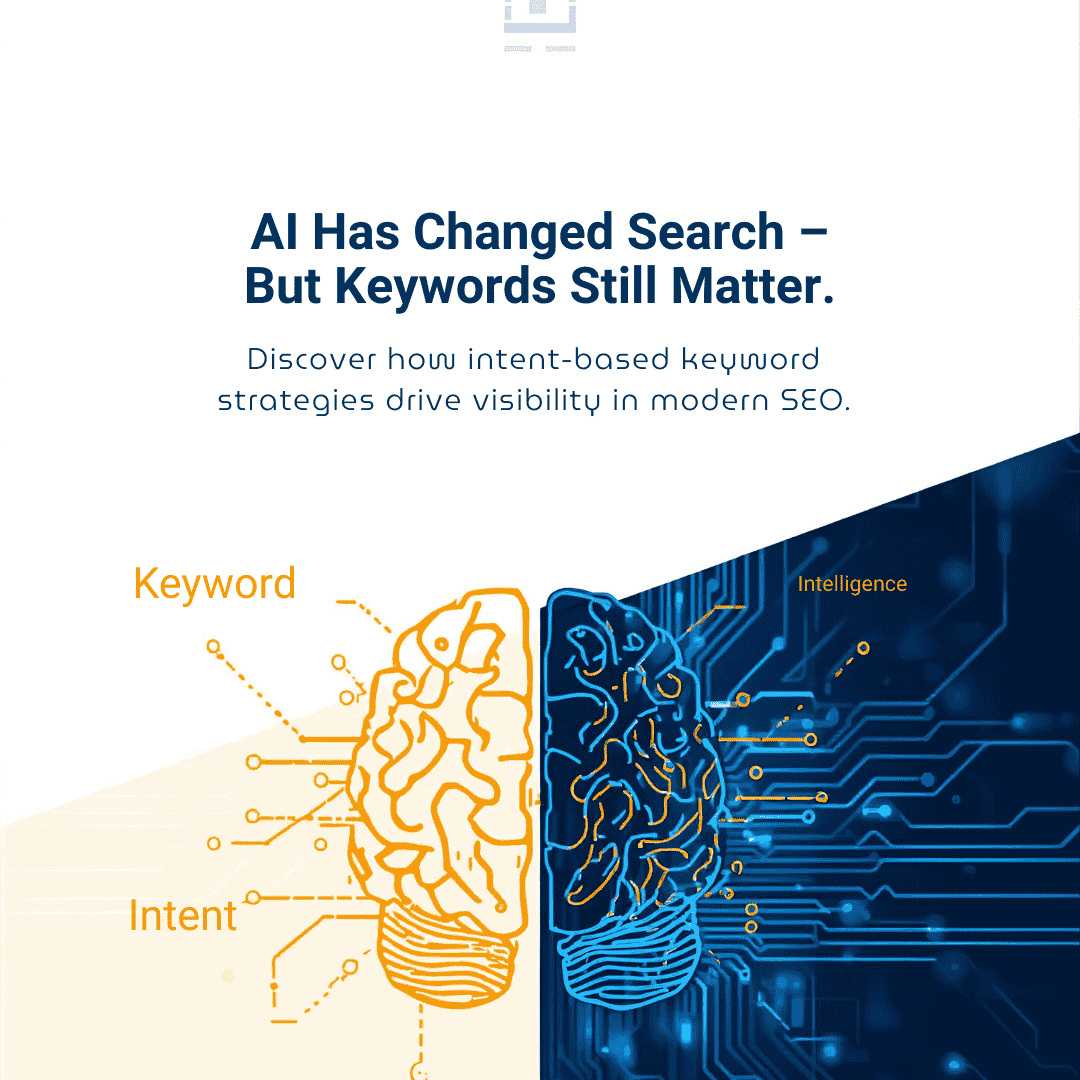
Though AI is changing how search engines work, keyword research is still remaining as an essential part of SEO. Search engines may become smarter, they still depend on keywords to understand about a page and when a page should appear in search results. Keyword research acts as a link to the content that the businesses have created.
Currently, the role of keyword research has changed from merely repeating words to understanding the intentions of the people using them. This task assists in determining the questions people are asking, the manner in which they are asking them, and what type of responses they are seeking in their searches.
Without keyword research, quality content may not be discovered to its full potential either. Improved visibility through keyword research strategies is beneficial in content structuring and the role of artificial intelligence in search engine results.
How AI Has Changed the Search Landscape
The once easily exploitable search engines are now as smart as ever. Modern algorithms can understand not only words, but more importantly the meaning behind them, thanks to machine learning and natural language processing. This transition enables search engines to offer more tailored and pertinent results.
- Search systems using AI today are able to interpret:
- Search intent (informational, navigational, transactional)
- Context as well as that literal wording
- Conversational and voice-based queries
- Related topics and semantic relationships
Google primarily uses AI technology to study patterns as well as the behavior and relevance of articles for more accurate results. And this shift has led some marketers to think keywords are no longer important , but that isn’t true.
AI didn’t replace keywords; it made them more intelligent.
Keywords Are the Foundation of Search Intent
Ultimately, the essence of every search is based on a set of keywords that a user types or utters. This is where the value of keywords research comes into play because it enables a business to eliminate assumptions and figure out the real intents of searches by the users.
Through keyword research, a company can get insights on the following:
- What problems are people trying to solve?
- What language do they use to describe those problems?
- Where are they in the buying journey?
- What level of detail are they searching for?
With the presence of AI in the search environment, keywords are now more like indicators or signals for intent, as opposed to factors that mainly contribute to ranking. This understanding enables a creator to produce content based on what the user truly searches for, not on assumptions of the user’s intent.
From Exact Match to Intent-Based Keywords
Traditional SEO heavily relied on exact-match keywords. As search engines evolved, their ability to understand meaning, context, and relationships between terms also developed. Today, keyword research focuses on intent rather than repetition.
Modern SEO strategies prioritize different types of keywords, including:
Types of Modern Keywords That Matter
- Informational keywords
Used by people learning about a topic
Example: “What is AI-powered SEO” - Commercial intent keywords
Used when comparing solutions
Example: “Best SEO agency for startups” - Transactional keywords
Used when ready to take action
Example: “Hire digital marketing agency Boston” - Long-tail keywords
More specific, lower competition, higher intent
Example: “How AI affects keyword research for SEO”
AI-powered search engines rely heavily on these patterns in their ranking of content. Keyword research enables you to map content to each stage of the buyer journey: to ensure your content supports discovery, consideration, and conversion.
Why Keyword Research Is Still Critical for SEO Success
Despite the rise of the AI-powered world, the concept of keyword research has its roots as an essential part of search engine optimization. The concept bridges the intentions of users and the realm of content optimization.
1. It Guides Content Strategy
An effective content strategy requires understanding demand. Keyword research will help determine what the audience cares about and how that audience wants information to be delivered.
Content without keyword research is mere guesswork. With keywords, you can make informed decisions about:
- What topics to write about
- How deep the content should go
- Which questions need clear answers
- What format works best (blogs, guides, FAQs)
AI prefers content that contains topical authority. Keyword research helps you build clusters of related content instead of isolated blog posts.
2. It Improves Content Relevance and Rankings
helpfulness and relevance are prioritized in AI-powered search engines over keyword repetition And keyword research is required to make sure that your content is clearly communicating serving its purpose to both users and algorithms.
Proper keyword research ensures:
- Your content aligns with user intent
- Headings match search expectations
- Supporting terms reinforce the main topic
- Content answers real user questions clearly
This enhance engagement metrics like- time on page and bounce rate and other signals AI uses to assess your content quality.
3. It Supports Voice and Conversational Search
The rise of voice searching will make it more and more essential to comprehend the manner in which people tend to speak when formulating their searches. The keyword research helps to reveal the manner in which people speak when formulating searches
This voice-optimized keyword research assists in finding:
- Question-based searches
- Natural language phrases
- “Near me” and local intent queries
Spoken-style long-tail keywords
When targeting these, your content will be optimized for AI assistants as well as voice-driven search results.
Keywords and AI: Working Together, Not Against Each Other
One thing that is widely believed is that keywords and AI are at opposites. However, the truth is that both essentially complement each other to understand the content better by search engines. AI uses the concept of keywords to understand them better. AI relies on keywords as signals, but it evaluates them within context, structure, and overall content quality rather than in isolation.
Today, effective keyword research is about building meaningful connections between topics, intent, and user needs. Instead of focusing on individual terms, modern SEO emphasizes how keywords support the broader message and purpose of a page.
Modern keyword research focuses on:
- Topic relevance
- Semantic relationships
- Searcher intent
- Content depth and clarity
When keywords are used naturally within well-structured content, AI systems can:
- Understand what your page is about
- Match it to multiple related queries
- Surface it for a wider range of searches
This is why one well-optimized page can rank for hundreds of related search terms, delivering consistent visibility without relying on keyword repetition.
The Role of Keyword Research in Content Optimization
After content creation keyword research plays a key role in how content is optimized and presented across a page. It influences important on-page elements such as:
- Page titles and meta descriptions
Keywords help search engines understand the page topic and encourage users to click from search results. - Headings and subheadings
Keywords structure the content, making it easier for users and search engines to scan and understand key sections. - Internal linking strategy
Keywords guide how pages are connected, helping search engines discover related content and improve site navigation. - Image alt text
Keywords in alt text improve accessibility and help images appear in relevant search and image results. - FAQ sections
Keyword-driven FAQs address common user questions and improve visibility in featured snippets and voice search. - Schema and structured data
Keywords help define context, allowing search engines to better interpret and display content in rich results.
AI-driven search favors organized, easy-to-scan, and well-labeled content. Keywords help structure content in a way both users and algorithms understand.
Local SEO and Keyword Research Still Go Hand in Hand
For businesses serving specific locations, keyword research is essential for visibility in local search results. AI-powered local search still relies heavily on relevance signals.
Keyword research supports local SEO by targeting:
- Local service searches
Keywords help your business appear when people search for specific services in their city or area. - “Near me” queries
Keyword optimization improves visibility for location-based searches made by users on mobile or voice search. - Google Maps and local pack visibility
Keywords help Google match your business to map results and local listings shown at the top of search pages. - Location-based intent keywords
These keywords connect your services with specific locations, helping attract high-intent local customers.
Ignoring keyword research can significantly limit local discoverability,especially in competitive markets.
Common Mistakes Businesses Make Today
As search behavior evolves, many businesses still rely on outdated SEO practices or incomplete keyword strategies. These mistakes often lead to wasted effort, poor visibility, and content that fails to connect with real user intent,despite strong AI tools being available.
Common mistakes include:
- Chasing high-volume keywords without intent
High traffic doesn’t mean high value. These keywords often attract the wrong audience and fail to convert. - Ignoring long-tail and low-competition phrases
Skipping these keywords means missing highly targeted searches with stronger intent and better conversion potential. - Overusing AI tools without strategy
AI can generate content fast, but without direction it often produces generic, unfocused results. - Writing content without a keyword framework
Content without keyword structure lacks clarity, making it harder for search engines and users to understand. - Forgetting to update old content based on new search trends
Outdated content loses relevance over time, even if it once ranked well.
Effective keyword research requires human understanding + AI insights, not one or the other alone.
How to Adapt Your Keyword Strategy for the AI Era
Adapting to AI-driven search requires more than using new tools,it demands a shift in mindset. Businesses must focus on intent, context, and content quality to ensure their keyword strategy stays relevant, scalable, and aligned with how modern search engines understand information.
A modern keyword strategy should focus on:
- Search intent, not just volume
Focus on why people search, not just how many do,intent drives relevance and conversions. - Building topic clusters, not single pages
Group related content together to show authority and help search engines understand context. - Using keywords naturally, not mechanically
Keywords should flow naturally within content, improving readability and trust for users and AI. - Optimizing for questions and conversations
Target how people actually ask questions, especially for voice search and AI-generated results. - Updating content regularly based on data
Refresh content using performance data to stay relevant as search behavior and trends change.
Keyword research is no longer static,it’s an ongoing strategic discipline.
Keyword Research Is Evolving, Not Disappearing
Despite the rise of the AI search environment, the importance of key word research cannot be overemphasized as a cornerstone of online search engine optimization. Even though there is a better understanding of context and intent by the search engines, key word research bridges the gap of searches carried out by users and how the content is retrieved and viewed as a result of online searches.
Instead of keyword research and analysis being done by AI, it has transformed into an intent-based activity. This helps with content optimization, topical authority, conversational queries, and getting long-term visibility. Those doing business through automated tools might end up going out of relevance.
The key to successful SEO, therefore, is the fusion of human intelligence and the power of AI. It is only by grasping people, their language, and behavior that the art of researching keywords, to create valuable content that consistently outperforms through the tested guiding principles of AI: relevance over shortcuts.